
Understanding How to Buy MOTS-c Peptide for Research

Key Highlights
- MOTS-c peptide is a research chemical known for its role in metabolic homeostasis.
- Studies explore its potential to improve insulin sensitivity and support muscle function.
- When buying for research use, supplier selection is critical to ensure product purity.
- The legal status of MOTS-c designates it for laboratory and experimental use only, not for human consumption.
- Verifying a supplier’s Certificate of Analysis (COA) and third-party testing is key to a successful purchase.
- Proper storage after purchase is essential to maintain the peptide’s integrity for research.
Introduction
Are you a researcher interested in the potential of novel peptides? The MOTS-c peptide is gaining significant attention in the scientific community for its fascinating role in metabolic regulation. As a research chemical, it offers a unique opportunity to explore cellular mechanisms related to energy balance and insulin sensitivity. This guide will walk you through the essential information needed to purchase MOTS-c for your laboratory studies, from understanding its applications to navigating legal considerations and selecting a reliable supplier.
Overview of MOTS-c Peptide for Research
MOTS-c is a compelling peptide for scientists studying metabolism and aging. Its unique origin from the mitochondrial genome sets it apart, offering new avenues for understanding how cells manage energy.
For researchers, this molecule is valuable in various experimental models. Its application in laboratory experimentation helps shed light on complex biological processes. Let’s explore what MOTS-c is and its common research applications.
What Is MOTS-c Peptide?
MOTS-c, which stands for “mitochondrial open reading frame of the 12S rRNA-c,” is an amino acid peptide composed of 16 amino acids. What makes it so unique is that it’s encoded by a short open reading frame (sORF) within the mitochondrial DNA but is translated in the cell’s cytoplasm. This highlights a fascinating communication link between mitochondria and the rest of the cell.
This peptide functions as a signaling molecule, often called a “mitokine” or mitochondrial hormone, because it circulates throughout the body and influences various tissues. It plays a crucial role in regulating energy metabolism by acting on a key signaling pathway.
Because of its broad influence on cellular processes, MOTS-c has become a significant point of interest for researchers investigating metabolic health and longevity. Its discovery has opened up new possibilities for understanding how mitochondria communicate and regulate systemic functions.
Common Research Applications
Numerous studies highlight the potential of MOTS-c peptide in advancing our understanding of various biological processes. Its role in metabolic homeostasis, particularly in cellular metabolism and energy production, has gained significant attention. Research involving this peptide often focuses on enhancing insulin sensitivity and investigating its effects on skeletal muscle metabolism, especially in the context of aging and metabolic stress.
Experimental studies using animal models have demonstrated the peptide’s influence on glucose uptake and adipose homeostasis, revealing its possible applications in addressing conditions like insulin resistance. Furthermore, the differentiation of bone marrow and the modulation of nuclear gene expression underscore MOTS-c’s therapeutic use in regenerative medicine. As researchers continue to explore its capabilities, the implications for improving muscle function and overall metabolic health remain promising.
Legal and Regulatory Considerations in the United States
Navigating the legal landscape for MOTS-c peptide in the United States requires a thorough understanding of its classification and intended use. These peptides are often deemed research chemicals and are primarily intended for educational purposes, primarily within controlled laboratory settings. Regulatory bodies emphasize compliance with guidelines surrounding the procurement and utilization of these substances, particularly concerning their therapeutic aspects.
When selecting suppliers, ensure they possess the necessary certifications, including a certificate of analysis that confirms product purity. Research use can also necessitate adherence to specific regulations regarding documentation and storage, crucial for maintaining the integrity of experimental studies. Engaging with qualified professionals who understand the implications of nuclear gene expression and mitochondrial function will facilitate both compliance and successful outcomes in your research endeavors.
Research-Only Use Guidance
If you’re wondering, “Can I buy MOTS-c peptide for personal use or is it for research only?”, the answer is clear: it is strictly for research use. The sale of MOTS-c is intended for qualified professionals conducting experimental studies in controlled laboratory settings. Any other application, especially personal or therapeutic use, is prohibited by law.
This restriction is in place because MOTS-c has not been evaluated or approved by the U.S. Food and Drug Administration (FDA) for safety or efficacy in humans. Its effects have only been observed in preclinical and in-vitro research. Therefore, it cannot be sold as a supplement, drug, or for any diagnostic purpose.
Reputable suppliers will require buyers to confirm they are at least 18 years of age and are purchasing the product for legitimate research purposes. This ensures that the use of research chemicals like MOTS-c adheres to legal and ethical standards, protecting both the researcher and the public.
Regulatory Status and Compliance
The regulatory status of MOTS-c as a research-only compound is a key point to understand. Is it legal to purchase MOTS-c peptide for research purposes? Yes, it is legal for qualified professionals and licensed researchers to buy it for laboratory investigation. However, this legality comes with strict compliance requirements.
These products are not intended for any therapeutic use, and any statements about their biological activity are based on preclinical findings. They have not been approved by the FDA for treating any condition. This means marketing or using them for any health-related outcome in humans is against regulations.
To maintain compliance, researchers must handle and use MOTS-c exclusively within the confines of laboratory experimentation. Suppliers enforce this by selling only to individuals and institutions that can verify their research credentials. Following these guidelines ensures that your work remains within the legal framework governing research chemicals.
Criteria for Selecting MOTS-c Peptide Suppliers
Choosing the right source for your research materials is paramount to the success of your experiments. When it comes to supplier selection for MOTS-c, quality and transparency should be your top priorities. The purity of the peptide directly impacts the validity and reproducibility of your results.
A trustworthy supplier will provide comprehensive documentation, such as a Certificate of Analysis (COA), to verify the product’s quality. Paying close attention to these details will help you avoid substandard products and ensure you receive a high-purity compound for your studies.
Indicators of Trustworthy Brands and Manufacturers
What should you look for when choosing a MOTS-c peptide supplier? Identifying trustworthy brands and manufacturers involves looking for clear signals of quality and transparency. A reputable company will be upfront about their manufacturing processes and quality control measures. They understand that researchers need reliable and consistent products.
Look for suppliers who provide detailed product information on their website. This includes the peptide’s sequence, molecular weight, and purity levels. Another sign of a reliable manufacturer is excellent customer support and a clear commitment to the research community. They should present themselves as partners in your scientific endeavors.
Key indicators of a trustworthy supplier include:
- Transparent Lot Tracking: Systems that provide complete visibility from production to the vial you receive.
- Detailed Product Information: Clear specifications, including sequence, purity, and CAS number.
- Positive Customer Reviews: Feedback from other researchers can offer insight into a brand’s reliability.
- Accessible Certificate of Analysis: Easy access to COAs for every batch.
Certifications, Purity, and Third-Party Testing
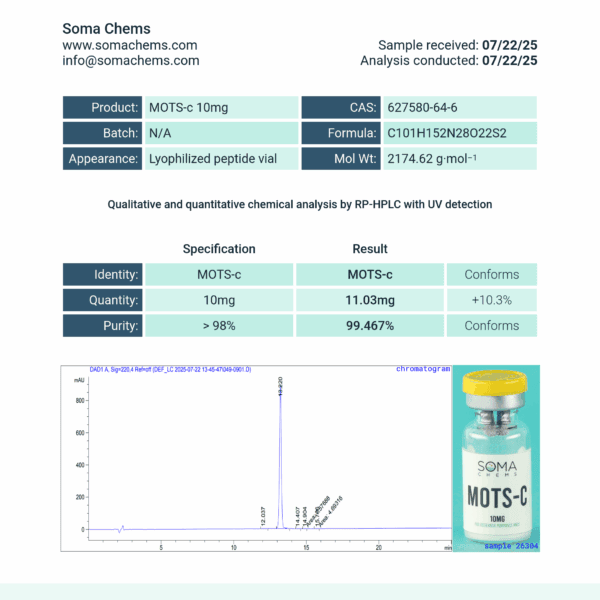
How do you verify the quality and purity of MOTS-c before buying? The most crucial document for this is the Certificate of Analysis (COA). Reputable sellers will provide third-party COAs for each batch of MOTS-c they sell. This independent verification confirms the peptide’s identity, purity, and concentration, ensuring you get exactly what you paid for.
Purity is a critical factor, as contaminants can interfere with your experimental results. Look for suppliers who guarantee a purity of 99% or higher, verified by testing methods like High-Performance Liquid Chromatography (HPLC) and Mass Spectrometry (MS). These tests confirm that the peptide sequence is correct and that impurities are minimal.
Always check if the COA is recent and corresponds to the specific lot number you are purchasing. Some suppliers even offer advanced lot tracking systems that link your vial directly to its testing data. This level of transparency is the hallmark of a high-quality supplier committed to supporting rigorous scientific research.
Purchasing Process and Practical Tips
Once you’ve selected a reliable supplier, the purchase process for MOTS-c is typically straightforward for qualified researchers. Most online suppliers have a simple checkout system, though some may temporarily disable web checkout and require you to contact them directly for purchase, ensuring that buyers meet the research-only criteria.
To ensure your laboratory experimentation is successful, it’s also helpful to be aware of practical details like available vial sizes and pricing. Understanding these aspects ahead of time allows for better planning and budgeting for your projects.
Price Range and Available Vial Sizes
What is the typical price range for MOTS-c peptide vials? The cost can vary depending on the supplier, purity, and the amount of peptide per vial. Generally, prices are competitive, with discounts often available for bulk purchases. It’s wise to compare a few reputable sources to find a balance between cost and quality.
When buying MOTS-c peptide, you will find different vial sizes are available to suit various experimental needs. The most common sizes are 5mg and 10mg vials. This flexibility allows you to purchase the precise amount needed for your study, minimizing waste. Some suppliers may offer larger quantities upon request for extensive research projects.
Here is an example of what you might find for pricing and availability:
| Vial Size | Price (Example) | Status |
|---|---|---|
| 5mg | $29.99 | Out of Stock |
| 10mg | $47.99 | In Stock |
Note: Prices are for illustrative purposes and can vary by supplier.
Proper Storage, Handling, and Quality Assurance
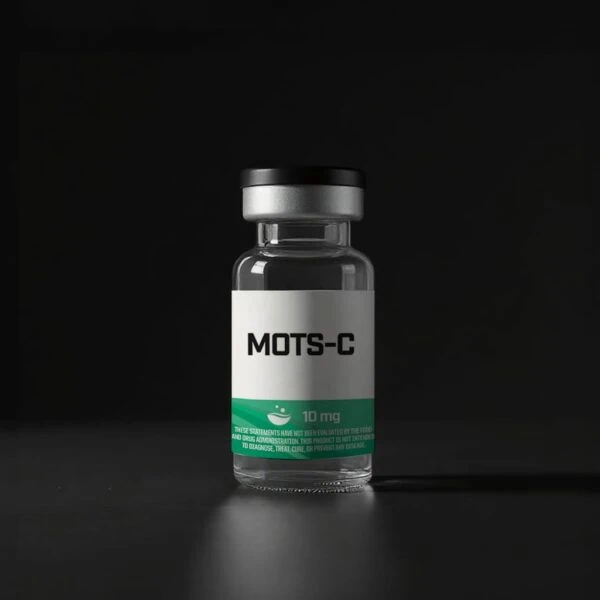
After you purchase MOTS-c, how should it be stored? Proper storage and handling are critical for maintaining the peptide’s stability and ensuring quality assurance throughout your research. MOTS-c is typically sold as a lyophilized (freeze-dried) powder in a sterile vial, which is the most stable form for shipping and long-term storage.
Upon receipt, the lyophilized powder should be stored in a freezer at -20°C or colder. Once you reconstitute the peptide with a solvent like bacteriostatic water, the solution becomes less stable. The reconstituted solution should be refrigerated at 2-8°C and used within a short period to prevent degradation.
To ensure the integrity of your research material:
- Store Lyophilized Powder: Keep it in a freezer at -20°C for long-term stability.
- Handle with Care: Use sterile techniques when reconstituting the peptide to avoid contamination.
- Store Reconstituted Solution: Keep it in the refrigerator and use it promptly according to your research protocol.
Conclusion
In summary, purchasing MOTS-c peptide for research involves careful consideration of various factors, from understanding its applications to selecting reliable suppliers. A thorough knowledge of legal and regulatory guidelines is essential to ensure compliance and safety in your research endeavors. By focusing on trustworthy brands, checking certifications, and maintaining quality assurance throughout the purchasing process, you can enhance the reliability of your research outcomes. If you have any questions or need further assistance as you navigate this journey, don’t hesitate to get in touch!
Reviews
There are no reviews yet.